Showing posts with label Contemporary Fiction. Show all posts

Friday, October 29, 2010

"Everything aspires to the light."

From this height it was possible to see into the dream that produced the school, not mere English-envy but the yearning for a chivalric world apart from the din of scandal and cheap dispute, the hustle and schemes of modernity itself. As I recognized this dream I also sensed its futility, but so what? I loved my school no less for being gallantly unequal to our appetites - more, if anything.


After an absence of two months, I announce my triumphant return to the Unstructured Book Group! This month's selection was Tobias Wolff's Old School, three portions of which had previously appeared in The New Yorker as short stories.

The unnamed narrator is a senior (or "sixth former") on scholarship at an elite boys' prep school somewhere in New England. It is 1960-61. The school is noted for both its pretensions to meritocracy and strong identification with literature. Several times a year they play host to a Great Author and there is an accompanying writing contest for a one-on-one audience. (This year, they will be visited by Robert Frost, Ayn Rand, and Earnest Hemingway.) Naturally enough, the narrator has strong literary ambitions of his own and, with graduation on the horizon, wants nothing more than to win and have a chance to speak with a legend of the field. Meanwhile, he is increasingly aware of the illusionary bubble that encases the school's culture and all the things left unsaid to prop up the dream. Hard lessons will be learned when reality makes its inevitable intrusion.

The school is a transplanted Oxford vision of old bricks laced with ivy, rolling green hills, tweed, tradition, and tea (or a Ralph Lauren ad). Its scholarly, über-prep atmosphere is timeless and could fit easily on either side of the Atlantic at any time in the last century. Everything revolves around literature, and the boys spend most of their academic hours arguing with their "masters" about this or that poem or novel. Non-English teaches are relegated literally to the fringes. Despite the seniors' reflections on impending adulthood and the close of this educational stage, there is remarkably little anxiety about their futures. After all, with this school on their resume and the wealth and status enjoyed by most of their families, their solitary preoccupation with literature is, despite all efforts to pretend otherwise, a striking mark of class, gender, and racial privilege. (They are genuine, honest-to-god WASPs. The 100% real thing.) Although any bibliophile would certainly love to spend a few days in this place, the stuffiness - reminiscent of a wood-paneled library chock-full of dusty old volumes - would eventually become oppressive.

The year this story takes place in is no accident. Like the characters of Mad Men, these boys are about to emerge into a world of tumultuous changes whose distant rumbles are being heard even among themselves. The subtle exclusion of the Jewish students, for example, seems to foreshadow the increased diversification of previously restricted spaces. Feminism and the Vietnam War make their entrance in the final two chapters.

The narrator himself has some Jewish background in his family, although he himself is not Jewish. Issues of identity are beginning to trouble him, however, and in the era before widespread multiculturalism in both and life and literature, he lacks the conceptual framework to write his own story. What ends up landing him in hot water is basically the effects of conformity in the conservative, old-money monastery that is his school. The arrival on campus of some fireman due to a small, accidental blaze inspires a moment of long-buried self-awareness:
For a moment I saw this place as I had first seen it: how beautiful it was, and how odd. I felt its seclusion and how we'd come to resemble each other in that seclusion. We dressed so much alike that the inflections we did allow ourselves - tasseled loafers for the playboy, a black turtleneck for the rebel - were probably invisible to an outsider. Our clothes, the way we wore our hair, the very set of our mouths, all this marked us like tribal tattoos.
He later admits that this role of Shabby Prep he has adopted is not his own - it is merely a signifier of his identification with an elite institution he could never have afforded without his scholarship. The primary theme of Old School is how the writer finds their voice and the influence of other writers in the process. When the narrator comes across a story that reflects his own experiences, that truly speaks to him as a working class individual of Jewish background surrounded by Anglo-Saxon wealth, the vertiginous happiness at such a discovery, combined with the impending arrival of Hemingway and the chance to meet with him if I win this contest, results in the narrator committing, ironically, the Mortal Sin of Writing.

Old School is one of the most readable books I have come across in some time. It is vivid and profound, yet holds the readers interest and flies by quickly. Wolff actually has quite a lot going on in its mere 195 pages, and I encourage everyone to check out the rest of the Unstructured Book Group for their different takes on it.


Tobias Wolff's Old School was our Unstructured Group Read for the month of October. Please feel free to join us at any time! You can find a complete book list here.

Past selections:

March: Tennessee Williams, The Night of the Iguana
April: Georges Perec, Life: A User's Manual
May: Margo Lanagan, Tender Morsels
June: Gabriel Josipovici, Moo Pak
July: Kenzaburo Ōe, A Personal Matter Rouse Up O Young Men of the New Age!
August: William Carlos Williams, In the American Grain
September: Tomás Eloy Martínez, Santa Evita


Wednesday, October 6, 2010

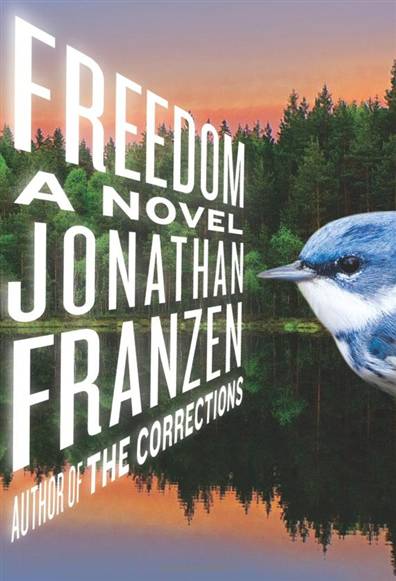
Jonathan Frazen's Freedom (A Guest Post by Joseph Gustav)


For nine years, readers have eagerly awaited Jonathan Frazen's follow-up to the National Book Award-winning The Corrections. His is a tall order: to create a fourth-novel in the wake of a work that regularly appears, and deservedly so, on "best of the decade" lists. His latest, Freedom, will not disappoint even the most ardent Corrections-lovers with the highest expectations; it is simply that good. A tale of suburbia, and America at large, gone awry, it features the fully-rounded characters that have been the highlights of his first three novels and shows that Frazen has not lost a step during his time off.

Freedom is the story of Walter and Patty Berglund, once St. Paul, Minnesota's golden couple. Walter was a devoted family man who cared about the environment, riding his bike to work every day and working as an environmental lawyer. Patty was the ideal neighbor, wife, and mother; together, they were the gentrification generations best, the pinnacle of the Whole Foods crowd. Within the novel's first 30 pages that all falls apart. Walter has his hand in the demolition of a West Virginia mountain working for Big Coal. Patty has gone off her rocker, raging war against her ultra-conservative neighbors and coming unhinged all before the neighborhood's ever-watchful eyes. Teenage son Joey has moved in with the aforementioned neighbors, has a clingy, borderline crazy girlfriend, and has signed on as sub-contractor to help rebuild post-war Iraq. And now Richard Katz, burned out rock star turned deck builder and Walter's friend and rival, has re-entered the picture.

The bulk of the novel is spent detailing how the Berglunds have arrived at their current disarray after once serving as an example of hope and a standard for the ones around them to try to reach. It chronicles Patty through girlhood, a sexual assault, a failed college basketball career, and the love triangle between her, Walter, and Richard. The characters' actions may at times border on despicable, but Frazen always provides a reason for them in the midst of current issues such as the environment, war profiteering, and gentrification. At times it is difficult to separate the Berklunds from the issues themselves because they serve as foils for Frazen to investigate the morality and reasoning behind such shady, even considered sinister events that have received so much attention and criticism of late.

But these instances are where the novel is its most compelling. The world is changing rapidly, too rapidly at times for even the most progressive-thinking individuals, the ones who brought about change in their heyday and now find themselves grasping to hold on to what was. The world is confusing, and Freedom follows the characters as they try to sort out this confusion. They make compromises in middle-age out of what they think is necessity, they are occasionally horribly immature for their age, they are exceptionally vulnerable and human. Freedom is truly a moving depiction of our current time, one that presents brand new challenges that have the power to compromise those with the supposed utmost integrity. What may be most remarkable about the novel is that, even after exploring these often unlikable characters and their faults and triumphs and trials and disappointments, they are likable. The reader is deeply invested in them and their plight. And when all is said and done, there is even a glimmer of hope at Freedom's conclusion.

Joseph Gustav is a guest blogger for My Dog Ate My Blog and a writer on online schools for Guide to Online Schools.

Thursday, August 19, 2010

Horrible Dare Challenge: The Christmas Sweater

"Besides, if God wasn't here with both of us right now, then why would we have this beautiful night sky? Look at the clouds, Eddie. They're full of snow. And when God squeezes them from heaven tonight, we're going to have the kind of white Christmas your father always loved."


Usually when a book has a title like The Christmas Sweater it's either a kid's book or it's supposed to be ironic. Glenn Beck's novel is neither of these things. Glenn Beck is Serious Business.

But really, the title is just the beginning.

This book is awful. It is absolutely the most resoundingly awful book I have ever read. The Christmas Sweater leaves L.A. Candy so far behind in the dust that I have no choice but to proclaim it the new Nameless Horror. It stinks. It reeks to high heaven. It is cheese-coated narm with extra cheese. WHY JESUS WHYYYYYY????

The Christmas Sweater tells the totally lameass story of twelve-year-old Eddie, who wants nothing more for Christmas than a red Huffy bicycle with a banana seat. But his father recently died of cancer and his mother has to work four jobs to make ends meet. Instead of the bike, he receives a hand-knitted sweater that his mother had worked very hard on. Naturally, Eddie is an ungracious little brat who throws the special handmade gift into the corner of his room right where his mother can see it. (It's a real woobie scene.) Don't you just love this kid? So then they go to his grandparents' farm where he just acts even more miserable until his grandfather feels sorry for him and convinces his mother to take him home even though she's too tired to drive. And then they get into a car accident and his mother dies. This sends Eddie into High Octane Emo Mode. He goes to live with his grandparents and is determined to make them as depressed as he is.
Grandpa looked stunned. I went for the knockout punch. "Mom would still be alive if it wasn't for you making us leave that day."

Now it was Grandpa's turn to be speechless. I sensed his vulnerability and it made me even stronger. "You can go to church all you want, but none of the people there are really happy, so stop your preaching. Stop telling me how great things are because 'Jesus loves me,' and how happy we are because 'God is with us' and how 'we're the perfect little family.' It's all a lie." I was virtually shouting now. "Do you know why it's a lie. Because there is no God. Jesus doesn't love you. Jesus doesn't care." (192)
WAAAAAAMBULANCE! I NEED A WAAAAAAMBULANCE!

Jesus Christ Almighty, I hate this kid. Yes, this sentimental Christmas tale inspires much hatred indeed. Feel-good holiday story EPIC FAIL.

You've probably guessed by now that there's this big redemption scene at the end and you're right. Except it doesn't count because on page 255 we find out the whole thing, beginning with his mother getting killed, was just one big fracking dream. In other words, the Very Important Lesson doesn't count because none of it was real. So do Eddie's friend Taylor and his family exist or not? What is this subliminal existential horror I detect?

Here's what I would do: if your whole life is going to be one big fracking dream, why not make it an awesome dream? Now it is mentioned twice that Eddie has a Star Wars bedspread. So you know how Eddie the narcissist just dwells in the past and wallows in his Wangst and feels real powerful when he makes the people who love him really sad? This is exactly how the Dark Side of the Force works: "YOUR HATE MAKES YOU POWERFUL." I say we turn The Christmas Sweater into a Star Wars story in which Russell, the mysterious neighbor Eddie confided in, turns out to be a Sith Lord intent on seducing the whiny little emo to the Dark Side so that he could avenge himself on . . . uh, everybody, I guess. And we can have epic lightsaber duels and humongous space battles with X-wings and TIE Fighters and the Death Star and a Borg cube.


Yessss. . .

But, no.


Instead we're stuck with a heavy-handed preachfest that inundates the reader with homily after homily and lecture after lecture. And I haven't even gotten to the Decade Dissonance (The Christmas Sweater is supposed to take place in the '80s but it feels more like the '50s), the Great Stock Character Convention, or the Wannabe Wasteland ripped off from T.S. Eliot. Apparently this book was at least partially ghostwritten (there are two other authors credited on the Amazon page) but -

Hi. I'm a disabled veteran of the Great War. I have no eyes no ears no mouth no nose no arms no legs and no insurance. I don't understand why you get angry about all the trillions used to bail out Wall Street when you don't care about all the little guys like me.

I DON'T CARE??? WHAT DO YOU MEAN I DON'T CARE I JUST REVIEWED A HEARTWARMING BOOK ABOUT A CHRISTMAS SWEATER I SWEAR I'M GOING TO LOSE MY MIND TODAY! GET OUT OF MY REVIEW! GET OUT OF MY REVIEW YOU LITTLE PINHEAD GET OUT OF MY REVIEOJLLD
FKJMNCL
KOJPWREJGNFWALCJFAWPEOIKLDS


Nice going there, Joe. Really, nice going. Lord knows what horror she'll put us through now. . . Maybe that novel by Bill O'Reilly with the creepy shower- sex scene. . . *dies*.


Glenn Beck has written a a thriller! And it sounds AWESOME! (But seriously, Matthew Erwin deserves some kind of award.)

Note: The Sith half of the before/after pic comes from overdrivezero on DeviantArt.


The Horrible Dare Challenge is hosted by Rayche and TY. The three following Horrible Books must be read and reviewed (snarkily) by September 21, 2010:

L.A. Candy by Lauren Conrad
Hush, Hush by Rebecca Fitzpatrick
Shiver by Maggie Stiefvater

Extra credit: One Danielle Steele novel Glenn Beck's The Christmas Sweater

Coming Up: Joe and Karega review Shiver. (I was going to have them review The Christmas Sweater too but then I realized that required a level of political snark well beyond my capabilities.) I have another project in mind for Hush, Hush.

Monday, July 26, 2010

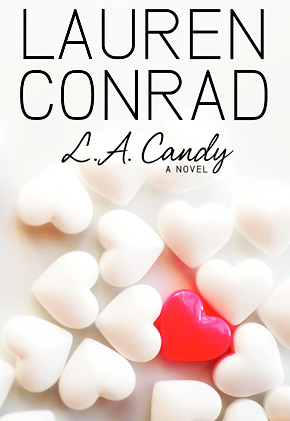
Horrible Dare Challenge: L.A. Candy

HAI!!!!1!!!11!!!! omg u guyz i just red teh most awesome book!!! la candy bai lauren conrad wuz so kewl. its all about jane & scarlett & how they become REALITY STARZ!!!1!
they move 2 la cuz scarlett is in coleg & jane is intern who halps plan partys 4 selebritys! & they go 2 this club & meet this produser & he wants them 4 his new show la candy & theres 2 other gurls madison & gaby. & then its all liek kafka & baudrillard cuz u not noes wuts reel & wut isnt liek teh produsers mak all this stuff up! liek this hot guy asks jane out & she tinks omg maybe teh produsers asks him 2 do this 4 teh show! & scarlett sees there poster & is liek omg its liek teh pretend us r lukin down at teh reel us omg! & iz liek teh fake world is moar reel! cuz wen u tinks bout it perez hilton > cnn cuz who cares bout teh pplz gettin blowed up in irakistan. but we still not noes wut happens cuz teh produsers plan evryting behind teh seens liek teh produser not lieks janes other boyfriend braden & wants to end there relashunship cuz iz bad 4 teh show. teh produser is like omg he cant be part of janes reality & then jane dates this famus playa and hez like omg this cudnt be better if i rites it myself.i noes this sownds rly nitemary liek jane & scarlett r trapt in matrix w/invizibl pupetmastr controlin them & invisibl eyez wachin them but iz rly not cuz they getz in 2 all these clubz and they getz new cloths and new partment from teh show cuz tat maks them kewler & iz liek teh fake world > teh reel world so who wants to lives in teh reel world cuz iz so boring &


Leech! Parasite! Profiteering, neo-colonialist exploiter of the Third World worker! Hi everybody. I'm Karega and this is Joe.

omg! ur ruinin my review!!!11! GO AWAY!!1!11eleventyone!!!!!!

No! We're here on behalf of the little guys the ones who work in the factories who put together your handbags and shoes like the Carthaginian slaves who were blinded by the great lords to guard their treasure stores and the Egyptian slaves tens and thousands of them who died building the pyramids.

LOLWUT?

Indeed, that is the crux of the matter from the ancient days to the violence and corruption of our times. History should be about those whose sweat and toil changed the course of the world! But how did it come about that the non-producing few are those whom we worship as the gods of the system? How can that be when there are those who labor twenty-four hours a day for these very same gods? And how can it be that, despite their work, these very same labourers go without food to feed their children and clothes to warm them at night against the cold winds from the north? That, my friends, is history's universal question, and it is only be deciphering what came before us that we can arrive at a true vision of the future, one where men and women can find joy and happiness in creative labour.

tl;dr

Remember this. Remember this you famewhores you spawners of lame trends you opiate of the people. Remember this like you have never remembered anything else in your lives. You want reality I'll give you reality how's this for reality: I have no voice to yell no legs to run no eyes to see no -

creepypasta yay! omg did u hear teh 1 about teh babysiter & she calld teh parints & wuz liek lol wut is tat creepy statue in ur yard & they were liek omg we not haz statue omg call 911

Never mind, Joe, the burden of the Truth is always upon the masses. One day we shall rise and take back what is ours. Then, only then, will the log fall from their eyes.

I just don't understand. I was hurt in the head real bad and I'm not nearly this stupid! How . . . how can this be?

ur meen i dont liek u

Oh Chrissake. Karega you have arms: GET YOUR GUN AND SHOOT HER!

What! You have no face and no limbs and you still think you can give orders to the black man! Well, let me tell you -

ooooooh luk! a clowd tat luks liek a powder puff!

Look this is all I want. Take me wherever there are parliaments and diets and congresses and chambers of statesmen. I want to be there when -

u wants publicity? i noes ppl who can halp. maybe u not haz such boring reality show after all. omg i just remberd my gurl paris met michael moore at teh kans film festivle & he wud totally liek u.

Seriously?

Don't listen to her!

& cindy sheehan 2! omg this will be so kewl lemme call my agent.

I am physically incapable of signing a release form. Can we make other legal arrangements?

I knew it. I knew something like this would happen. You white folks originated this system and you're all corrupted beyond hope, no matter who you are! You have no souls. You take and take and take and there's no end to it! You round-bellied jiggers and bedbugs with cannibalism as your highest goal! And for the love of Mwathi, why can't you two use commas?

Huh?

LOLWUT?


The Horrible Dare Challenge is hosted by Rayche and TY. The three following Horrible Books must be read and reviewed (snarkily) by September 21, 2010:

L.A. Candy by Lauren Conrad
Hush, Hush by Rebecca Fitzpatrick
Shiver by Maggie Stiefvater

Extra credit: One Danielle Steele novel Glenn Beck's The Christmas Sweater

Coming Up: Joe and Karega review Shiver. I have other plans, glorious plans, for Hush, Hush.

Friday, July 2, 2010

"true genius has no self-awareness"

Genius takes so many forms, and in our century we have (slowly) come to appreciate that the transcendence given by a Picasso is potentially found in other, less obvious places. It was that old reliable provocateur, Marcel Duchamp, who showed this when he abandoned object-making, moved to Buenos Aires, and took up chess full-time. . . He is in fact destroying the conventional boundaries of art, arguing that all forms of expression - all of them - are potentially equal. Painting is the same as chess, which is the same as rollerskating, which is the same as standing at your kitchen stove, making soup.

I've long been a fan of Faye Kellerman's Peter Decker/Rina Lazarus series. Given up for adoption at birth, Peter was slated to go to a Jewish family but, thanks to a snafu, was raised Southern Baptist in the swamps of redneck Florida. In the very first book, The Ritual Bath (1986), he is assigned to investigate a rape that occurred on the grounds of a local yeshiva. There, he meets Rina Lazarus, recently widowed, and her two boys, who act as the catalysts for Peter's rediscovery of his cultural roots. Since then Faye Kellerman has written eighteen Peter/Rina novels, the most recent being 2009's Blindman's Bluff. Not only are they great whodunits, but the purity and spirituality of Peter and Rina's faith contrasts powerfully with the grittiness of LA crime and gives the series a unique tone. Plus, you will learn A LOT.

I then heard that Faye Kellerman's husband is Jonathan Kellerman, also a bestselling mystery writer. Unfortunately, my reaction to his Alex Delaware series was "meh." I think that was because I generally don't read these particular genres (mystery/detective/crime/thriller) and was attracted to Faye's work primarily because of the intriguing Jewish angle. In fact, with some of the Peter/Rina books I find myself more interested in what's going on with their family than the actual plot. And then my aunt tried to get my mother and me into Janet Evanovich's Stephanie Plum series, but we both found One for the Money too utterly inane to finish. The humor was just so . . . dumb.

So when I heard that Faye and Jonathan's son Jesse Kellerman had joined the family trade, I was hopeful but skeptical. Would he take more after his mother or his father, or did he have his own voice? Is he actually a good writer or was he only published because of his parents?

My verdict: Jesse Kellerman's The Genius was AWESOME.

Narrator Ethan Muller, scion of a wealthy American dynasty, is estranged from his father and the family business. He runs his own gallery and hangs with the ultra-trendy, ultra-ironic New York art scene (as satirized in Quim Monzó's Gasoline) where the race is always on to discover the Next Big Thing. Life is a non-stop whirl of money, drugs, publicity, and personality until Muller is contacted one day by the superintendent of a seedy tenement owned by his family's company. Some 135,000 drawings have been discovered in the apartment of one Victor Cracke, a reclusive old man who has recently vanished. Despite his cynicism, Muller recognizes the value of the pieces right away.
I lack the vocabulary to describe to what I saw. Regardless: a dazzling menagerie of figures and faces; angels, rabbits, chickens, elves, butterlies, amorphous beasts, fantastic ten-headed beings of myth, Rube Goldberg machinery with organic parts, all drawn with an exacting hand, tiny and swarming across the page, afire with movement, dancing, running, soaring, eating, eating one another, exacting horrific and bloody tortures, a carnival of lusts and emotions, all the savagery and beauty that life has to offer - but exaggerated, delirious, dense, juvenile, perverse - and cartoonish and buoyant and hysterical - and I felt set upon, mobbed, overcome with the desire to look away as well as the desire to dive into the page.
But then Muller receives a call from a retired NYPD detective who had seen the New York Times review of Crackes' critically-acclaimed showing at Muller's gallery. The three cherubs shown in Panel 1, he explains, are all children who were raped and murdered in the late '50s and early '60s. He was the investigator assigned to the cases, but the killer was never found.

It soon becomes apparent that someone wants Muller to stop selling and exhibiting Cracke's work and may up the ante if he refuses to comply. So who was Cracke? Was he the killer? And why are we being given the complete century-long Muller family history, beginning with Solomon the Jewish-German immigrant peddler?

My fellow book blogger Jill reviewed Ian Rankin's Knots and Crosses a couple months ago and included excerpts from an interview Rankin had done for a German paper. In our culture, the first question went, there is no distinction between literary and crime fiction. So what's the deal with the English-speaking market? It's complicated, Ranking explained, but,
. . . When crime fiction started in England it was very much seen as being literature. [Charles] Dickens used elements of the crime novel in “Bleak House.” His very good friend Wilkie Collins basically invented the English crime novel with “The Moonstone.”

But then writers started to use amateur detectives, and started to have very outlandish plots, and to have lots of fun with obscure poisons and such. And suddenly it drifted away from the realm of literature.

Crime fiction as a genre grew up with the growth in the lower middle classes, and also with the growth in travel. People were commuting to work on buses and trains; they needed things to read and crime fiction gave them a nice easy read while they were traveling. So there was this distinction.

I thought about this a lot as I was reading The Genius, especially since Kellerman's story centers on these very issues of what constitutes art and what human activities can be elevated to the status of genius. My initial reaction to this book was that it was just too good to be "low-brow" genre fiction. In addition to tackling the complex themes of art, madness, and brilliance, Kellerman also employs advanced literary techniques such as irony, stream of consciousness, metafiction, and pastiche (the Muller family flashbacks are reminiscent of Gothic literature and the historical saga). In terms of satire, Kellerman's portrayal of the New York art scene blows away the more "literary" Quim Monzó. When a whack to the head lands Ethan Muller a prescription for Oxycontin, he decides he will give the drugs to his girlfriend, a prominent art dealer, to pass it out as party favors.

But above all, The Genius is a mystery novel that it never forgets its original purpose. The plot twists, turns, and thickens and gives us a vivid portrait of New York City along the way, from its centers of power and wealth to its courts and cops to its most marginalized denizens. Indeed, if true genius and true art are those human creations that are unconscious and unintentional, then what is New York's "savage garden"? The sprawling oeuvre of Victor Cracke, in all its vivid and multifarious contradiction, is the world he occupied in mind and body. And as Ethan reminds us several times, he, our narrator, is the star of a real-life detective story and here's how it compares to your typical book of the genre.

At this point, I suppose I could make an underhanded compliment and say that it's a shame The Genius has been relegated to the paperback section at your local CVS. Except that would be to miss the whole point. I don't know if Jesse Kellerman is a genius or not (although he certainly outdoes both his parents) but I hope anyone looking for a good, solid, entertaining read will consider checking him out. I definitely look forward to more Faye and Jesse in the future. Sorry, Jonathan.

See also: Kinkade and Saintcrow: Peas in a Pod

The fictional character Victor Cracke is clearly based on Harvey Darger, whose 15,145-page illustrated manuscript, The Story of the Vivian Girls, in What is known as the Realms of the Unreal, of the Glandeco-Angelinnian War Storm, Caused by the Child Slave Rebellion, was discovered by his landlords shortly before his death. Like Cracke, Darger was non-neurotypical, had a history of institutionalization, lived by a rigid routine (including daily Mass), and was initially inspired by a photo of a murdered child.

Saturday, December 5, 2009

Quantum Buddha

The Magician of Lhasa
By David Michie
Trapdoor Books
290 pages
December 7, 2009


"If we’ve had one previous lifetime, then we’ve had limitless lives before. Our subtle consciousness has existed since Beginningless Time. We’ve had not just hundreds of lives, not just thousands. And not only on planet earth, which is like a grain of sand on the beach of a universe, which has no end. The extent of our experience is as limitless, as infinite as time and space. And during all these lifetimes, who have been our Isabellas? Our lovers? Our friends and enemies?"


David Michie has been practicing Tibetan Buddhism for over ten years, having studied in remote temples in the Himalayas and made tour arrangements for the Dalai Lama. His Buddhism for Busy People is Australia's third best-selling book on the subject. Though ostensibly a thriller, his new novel, The Magician of Lhasa, is Michie's way of introducing the basic concepts of Buddhism to a much broader audience than can be reached through specialized nonfiction. It is also the debut novel for Trapdoor Books, a new Colorado-based press specializing in "geek fiction," their affectionate term for novels aimed at intelligent, well-educated audiences, which incorporate a particular well-researched topic - "anything from Assyrian history to plasma physics" - into their engaging storylines.

The Magician of Lhasa tells two parallel narratives: that of Matt Lester, a modern-day nanotechnologist, and Tenzin Dorje, a 16-year-old novice monk fleeing the Chinese Red Army's advance across Tibet in 1959. At first glance, they seem worlds and decades apart, but it soon becomes clear that events are overlapping and who you are today is but a single manifestation of a mindstream that stretches back through beginningless time.

According to quantum science, in which Lester is an expert, atoms are actually energy that briefly condense into particles before dissipating again. Thus: physical reality is an illusion. Lester's unexpected encounters with the monk Geshe-la and subsequent immersion in Buddhist philosophy only confirm what he already knew: that all seemingly substantial things are inmaterial, with no innate qualities, existing only as possibilites. People, places, and events are neither good or bad; they are what you make of them and nothing else. The breakup of an engagement, a major career setback, a military invasion, death - all of these can be thought of as simply detours forcing the individual to strike a different path and begin anew.

Despite the partially didactic nature of The Magician of Lhasa, Michie successfully balances both the educational and fictional aspects of the story, altogether creating a fast-paced work that leaves the reader with new insights into the Buddhist faith. Like all good works of geek fiction, The Magician of Lhasa is not a book to be forgotten once finished. Instead I feel like I just had a quick crash course in the basic tenets of Buddhism, along with compelling scientific evidence proving their benefits to emotional and physical health. I have to confess that when I saw the word "thriller" I was skeptical as to how this book would turn out. I've always associated that label with cheap paperbacks purchased at the grocery store. Needless to say, I was pleasantly surprised. I want to learn more! Geek fiction WIN!

Wednesday, September 9, 2009

Mary Sue and the Super Friends v. The Ugly Americans

The Rose Labyrinth
By Titania Hardie
Atria Books (Simon & Schuster)
448 pages
September 1, 2009


The Elizabethan world had an eclectic mix of inhabitants: politicians, theologians, poets and playwrights, explorers and glamorous old sea dogs like Raleigh and Drake. But the population also included an extraordinary array of spirits - fairies, demons, witches, ghosts, sprites - both good and ill: and conjurers to talk to them. It was totally within the fabric of their world for Spenser's great epic poem to be about a fairy queen and for Hamlet's troubles to be set in motion by the ghost. This fascinating blend of the physical and the ethereal worlds owed as much to a philosophy of occult thought at the most intellectual level as it did to a tradition of superstitions and folkloric influences.


Warning: This review contains spoilers.

The Elizabethan Era was a subject of great interest for me in college, beginning with my reading of Peter Linebaugh and Marcus Rediker's flawed but fascinating work The Many-Headed Hydra: Sailors, Slaves, Commoners, and the Hidden History of the Revolutionary Atlantic, a Marxist history book tracing the development of populist revolutionary movements from Renaissance England to the Caribbean to the American Revolution. It inspired my final research paper for the Renaissance Utopia senior seminar, where we also studied the various visionaries of the era, the religious and social upheaval that influenced them, and the uneasy collision of the medieval past and the dawning capitalist, scientific, and global future. So needless to say, I was eager to read Titania Hardie's 978-1615521630, an international bestseller from Britain released in the US by Simon & Schuster on September 1. Hardie imagines a long-buried conspiracy, involving politics and metaphysics, linking the tumultuous time of William Shakespeare and John Dee with the post-9/11 twenty-first century. For publicity purposes, The Rose Labyrinth has been compared to The Da Vinci Code. The similarities are there, but the two novels are really quite different.

Lucy King is a beautiful London-based television producer in her early 30s who contacted a parasite while on assignment in Colombia. The infection ravaged her heart so badly she needed a transplant. Meanwhile, her surgeon Alex Stafford's brother, William, has become deeply embroiled in a centuries-old puzzle set into motion four centuries ago by Queen Elizabeth's great astrologer and man of letters, John Dee. Will is mysteriously (and suspiciously) killed and his heart goes to Lucy, who begins a relationship with the handsome, reserved Alex following her successful operation. But her new heart possesses a "cellular memory" of its own, binding her very essence to that of Will's in a living example of Dee's theories on the reconciliation of opposites (the male and the female), the embrace of the foreign and unknown, and the unity of disparate elements (i.e. competing religious dogmas) at the highest level of paradise. Lucy and Alex's resumption of Will's quest brings them into conflict with a powerful group of American evangelicals obsessed with the Apocalypse. Dee allegedly spoke to angels, and they may have given him the exact date of the Rapture. Add that to the hot topic of religious terrorism, and an overall message of religious tolerance and the perils of religious bigotry emerges amidst a fast-paced physical and intellectual race for the long-buried papers of John Dee.

The Rose Labyrinth is also interactive: included in the back is a series of clues (puzzles, poetry fragments, word games, etc), most of which do not appear in the story itself. This gives the reader the opportunity to figure things out themselves and possibly solve the mystery before Lucy and Alex do. I didn't use them, but they do make fun supplemental reading. But even without referring to the clues, the reader is still inundated with historical trivia and verbal expositions on philosophical and metaphysical concepts. Now on the one hand, it's some pretty fascinating stuff; yet it also gives the dialogue an unnatural "lecture" feel. I read other reviews criticizing Hardie for this, but I think it's more a standard convention of the "religious/historical conspiracy" genre (i.e. The Da Vinci Code, The Historian, Sign of the Cross, The Lucifer Gospel, The Overseer). These books, by their very nature, are dependent on rapid intellectual discovery and the author's arrangement of history to form a cohesive narrative. Throw in some bad guys who represent the religious status quo and voilà!

Dialogue excepted, Hardie's writing is a huge improvement over that of Dan Brown. Will's death experience is extremely well done, as is a surreal Hell-themed party on the Thames, when a boatful of Elizabethan aristocrats is seen gliding out of the fog. I found myself, as with Elizabeth Kostova's The Historian, thinking that this is what The Da Vinci Code should have been.

However. . .

And here I become indignant.

First off: the protagonist. Like her creator, she's an Australian living in London. Her name Lucy or Lucia, means "light," which turns out to be very important, as is her last name of King. She has a glamorous television job that takes her all over the world. Her gorgeous doctor with the smart, adorable little boy falls in love with her. She's absolutely brilliant and surprisingly knowledgeable about various eclectic subjects ranging everywhere from Classical mythology to the many uses of the number 34. She sometimes acts as a mouthpiece for Titania Hardie's views on religion and politics (as do other characters - more on this next). She finds herself personally implicated in a conspiracy set into motion centuries ago by the intellectual luminaries of Elizabethan England. She's effortlessly self-sacrificing. She rallies everyone's spirits. Her heart transplant, though a vital aspect of the plot, is hardly a handicap but is instead a metaphysical device that links her across time and space to her beloved's dead brother so deeply and so intricately that her new heart becomes such a part of her that she may never need anti-rejection meds ever again! She gets to meet Shakespeare.

According to the Universal Mary Sue Litmus Test, Lucy scores 32, which indicates a potentially redeemable, but nevertheless undeniable, Mary Sue. On another Mary Sue test, however, Lucy scores a 57, which marks her as not only a Mary Sue, but an Über-Sue. But really, all the good guys here are fundamentally flawless. Calvin is obviously meant to be morally ambiguous, but he still somehow changes his ways after somehow falling in love with Sián, even though she is, as everyone admits, a rather shallow and unstable woman. Like I said, Hardie is great when it comes to atmosphere, physical description, and setting the scene. Still, her characterization and dialogue need some real work, particularly the villains. Behold:

"Gentlemen, here we are at last at the awe-inspiring Megiddo, the site of more than twenty civilizations over ten thousand years, piled on atop the other. From the time of Alexander through the blessed Crusades, and even down to Napoleon, men have fought and wept over this land. Ours will be the last layer - for this is designated Armageddon, the place for the cataclysmic battle of the Revelation, the site of the future victory of our Lord."

"Well, that's just why we should pay no mind at all to this silly talk on global warming, FTW!" The taller of the two men, with a huge girth and immense gray eyes, laughed. His strong Texan drawl spoke of merriment and would have been charming in any other context.

FW nodded solemnly. . . "It is from here that Jesus will come on the clouds of glory, to call us home. This two-hundred-mile-long valley will be three feet deep in blood by the time He finishes His great work." He squeezed their arms again from behind, wanting them to be a palpable part of his joy. "Just envision this beautiful Valley of Jezreel awash with the blood of what my people have calculated must be more than two billion people! And we will be with Him!"

MWA-HAHAHA! Eeeexcellent.


No seriously, that scene is awful. From the clichéd "evil villain" posturing (was Emperor Palpatine there too?) to the awkward, tacked-on global warming remark and the rich Texan stereotype, it reads like a liberal Democrat's caricature of the Republican party. Which brings me to a real problem I had with The Rose Labyrinth: Titania's soapbox tendency and its violation of the "show, don't tell" rule. The novel's themes were already apparent from the characters' intellectual discourse on radical Elizabethan thought and how it reacted to the era's religious warfare and persecution. We didn't need moralistic, self-congratulatory speeches like this:
"Simon, and Grace, and Calvin, I now realize, [that] you and I, and everyone like us, should shout from the rooftops about these people's terrifying influence on politics, and laws, and the freedom of our choices. No single religion has a monopoly on bigoted fundamentalism. In Revelation, Jesus is the hero with a 'sword in his mouth' - and I hope we can mount a very effective counteroffensive with our own words."
Or this:
"Their ideas are totally self-serving. The Rapture philosophy demands a consistently negative, chauvinistic, apocalyptic reading of Old Testament prophecy. . . But as Simon's been telling you, they have credulous ears in high places in my country now, and a president [Bush] who freely admits his belief in it all. We must find a way to stop them, quarantine their influence, or they'll have a devastating effect not only on the future of Christianity, but on all efforts toward religious harmony in the world."
I remember one of my English professors in college telling us about how she saw Michael Moore's Bowling for Columbine in Switzerland. "I just sat there and got madder and madder," she said, "because it confirmed Europe's worst stereotypes about Americans - that we're all provincial right-wing gun nuts." In all honesty, I became so infuriated by Hardie's portrayal of Americans as ultra-conservative Christian whack jobs that I had to put the book down for a day. Sounds silly, I know, but until about 3/4 of the way through of this European bestseller, every American character is a villainous zealot (including Calvin, initially, and after that he's still iffy).

Furthermore, for someone so concerned with tolerance, Hardie's overall treatment of conservative American Christians seems to fall short of her own ideals. I mean, if The Rose Labyrinth is an honest depiction of her political views, she is seriously afraid of them. Apparently there is a Vast Conspiracy in the US Government. Evangelicals have friends in high places and they mean business! They want TEH APOKALIPS NAO!1!!1! Sounds alarming, but really, that's actually a pretty common rhetorical device in demagoguery: claim a particular movement you dislike has way too much power and that it plans on destroying America As We Know It. According to Bill O'Reilly, there is a relentless army of "secular progressives" out there, in ur skoolz, brainwashin ur kidz. In ur kortz, bein "activist judges." OMG! WAR ON CHRISTMAS! And according to Glenn Beck . . . nah, I'll leave that one alone.

So how 'bout them Islamofascists?

</rant>

Sorry about that. But I felt it had to be said.

Snarky as I got, I have to say that, as indicated by the first part of this review, I did enjoy some parts of The Rose Labyrinth. I also had significant problems with it. I do recommend it - it's absolutely fascinating and full of great information - but I'm not saying it's a totally awesome book. I'd say three out of five stars.

Also recommended: Elizabeth Kostova's The Historian, about the search for Dracula, both vampire and real historical figure. It's actually way better than The Rose Labyrinth. And anyone interested in the roots of America's unique brand of Protestant Christianity is advised to check out Nathan O. Hatch's The Democratization of American Christianity.

Tuesday, August 4, 2009

Vigil (A Review)

Vigil
By Cecilia Samartin
Atria Books (Simon & Schuster)
432 pages
July 21, 2009


When I was a child and turned to Sister Josepha for comfort, she told me that only time could heal the wounds of the heart and that the deeper the wounds, the more time needed to pass. She also said that sometimes these wounds were so deep that no amount of time would ever heal them and only God's infinite love could offer hope. I surmised that with the years that had passed and God's grace to aid the process, my heart had finally healed enough to make me start remembering.


Cecilia Samartin
was born in Havana at the dawn of Fidel Castro's revolution. She came to the United States at a young age and grew up in LA, surrounded by both her parents' native Cuban culture and the American society outside. "I grew up as a typical first generation Cuban American girl," she says. "My parents worked very hard to learn English, and get ahead in a new country. . . My sisters and I went to school, played with our friends, and tried our best to blend in a town where there were virtually no other Cubans and very few Hispanics." Samartin studied psychology at UCLA, where she also strove to develop "a more integrated sense of myself and my roots." For the past twenty years, Samartin has been a practicing psychotherapist working with recently arrived Latin American immigrants. Her debut novel, Broken Paradise, was published in 2007 and won the prestigious International Latino Book Award. Her second book, Tarnished Beauty, was equally well-received by critics and colleagues alike and became an internatioal bestseller.

Vigil, released on July 21 by Atria Books, was inspired by those "rare individuals" Samartin has worked with "who are able to turn personal tragedy into profound inner strength, and who have the power to transform those around them" (press release from Atria). Shifting between past and present, first and third person, Vigil opens with Ana at her lover's side as he slowly succumbs to terminal cancer. As the minutes tick by, she thinks back on her life and how she went from an impoverished El Salvadorian village to a rambling estate in California. The sole survivor of a massacre in the midst of her country's civil war, Ana was taken to a Catholic orphanage, only to barely escape yet another massacre when she fled with one of the nuns, Sister Josepha (an American), through the jungle. Shortly afterwards, Ana arrives in the United States and completes her education at a Catholic school. She plans on becoming a nun, but fate intervenes and she is hired as a nanny for the Trellises, wealthy family with a three-year-old boy and a girl on the way. As the years go by, Ana becomes acquainted with the painful pasts of Adam and Lillian Trellis - a fatal car accident and sexual abuse, respectively - and copes with her unrequited feelings toward Adam. She is also a surrogate mother to Teddy and Jessica, often shielding them from the tension between their parents. Following the Trellis divorce, she learns, much to her great surprise, that Adam has always loved her too. Although he is now sick, they still have a short time in which to be together.

A constant theme throughout Vigil is that of Ana's ardent faith in God and willingness to trust in His plan. Despite the horrors she has witnessed (rape, mass murder), she seeks to constantly emulate God's love for His children by bringing hope and comfort to others. Ana is a transformative figure, often acting as the catalyst for positive change in the lives of those around her.

I wanted to like this book. I really did.

No, I didn't hate Vigil. Far from it - there are some areas where Cecilia Samartin's talent is undeniable. Ana and Sister Josepha's conversations about the nature of God, earthly suffering, and transcendence, as well as Ana's internal meditations on the subject, are reminiscent of the dialogues between Jane Eyre and Helen Burns, which have been said to compose some of the most beautiful writing on Christian faith in Western fiction. (Forgot where I read that.) In stark contrast are Ana's experiences in the El Salvador civil war. Related in clear, almost journalistic prose, the two massacres and Ana's time at the orphanage are morbidly riveting. Before that, Samartin had treated us to a vivid portrait of life in a village in the rainforest, exploring the relationships between men and women, the role of religion in daily life, and the ominous intrusion of politics into this seemingly timeless society. To see it suddenly shattered is jarring. Ana describes hearing strange howling noises, both times, prior to the violence - similar to coyotes but more ominous, "as though the animals were closing in on us from beyond the jungle." A truly surreal, threatening moment. I know what coyotes sound like. We have them here in upstate New York. I love them, but their sound really is piercing and eerie. Having read this, though, I think it's going to be awhile before I can listen to them in quite the same way.

In short, Vigil has a very strong first act. Unfortunately, after that it starts to feel more like "inspirational fiction." To begin with, I never got a strong sense of setting when it came to the Trellis's mansion and grounds, the way I did with Thornfield Manor in Jane Eyre or Manderly in Rebecca. One critic describes the Trellis estate as having a "gothic feel." An important element of Gothic literature is, of course, the role of architecture as an external representation of the darkness, secrecy, corruption, and/or madness exhibited by the human characters (think of the doomed castle in "The Fall of the House of Usher" or Rebecca's continued "presence" in Manderly). Samartin has stated that she sees the Trellis family as "living in a bubble or a time capsule of sorts" and agreed that the "anachronistic" quality of the estate (servants, grandeur) reflects that aura of stagnancy. I understand what she's saying, and certainly some Gothic elements are there (family secrets, tragic nobility, echoes of Jane-Rochester), but it never seems like the characters are living in anything other than your average run-of-the-mill McMansion. The estate feels like a two-dimensional backdrop.

Granted, the primary focus of Vigil is Ana and her relationships to the people around her. The story is more internal (psychological) than external. It is about how Ana's faith and inner strength get her through the trauma she has suffered, and how that emotional fortitude "rubs off" on Matt, Lillian, Millie (the cook), and the children, Jessie and Teddy. Samartin definitely had a great premise there but she ends up taking it too far. She piles tragedy upon tragedy to an almost melodramatic extent. (I don't want to give too much away, but other readers might know what I'm talking about.) The dialogue can be a bit much. "Ms. Lillian, if you just keep your mind focused on your husband and your precious children and put them before everything else," Ana lectures, "that should give you enough strength to move mountains." To which Ms. Lillian replies: "Help me, Ana. Help me change so I can save my marriage and be a better wife and mother." And then later on, Adam: "Ana, don't you see how you've woven your gentle spirit through me and softened my coarse heart?" No, not all of the conversation is like that, but still, Samartin really could've toned it down in several places.

This also reveals some flaws with the characterization of Ana. Samartin does try to "ground" Ana by referring back to her mother and her old life in the village; there is also an earthiness to her physical relationship with Adam, as well as a hint of moral transgression. Still, Ana is just too saintly and . . . well, detached is too strong a word, but I think she definitely felt removed from all the drama and dysfunctional people surrounding her. She is meant to be a highly sympathetic character, yet she borders on self-righteous in her "separateness" and the way she magically changes everyone's lives, dramatically alters behavior that's been going on for decades (i.e. alcoholism, sex addiction), and somehow makes every individual a better person just for having met her. It started to irk me after awhile. Adam's eventual death is heartbreaking (not a spoiler - you're prepared for that on the very first page) but the ending was still a little too perfect. Potential disaster regarding other characters - turns for the worst that could easily have led to years and years of ill-will - is narrowly, spontaneously, and miraculously averted, all thanks to Ana. But there is a surprise in the last pages that I did not see coming, so I do have to commend Samartin for that.

Again: I didn't totally dislike Vigil. It had its strong points. It was also melodramatic with some cheesy dialogue and an annoying angelic protagonist. I do think some people will enjoy it more than I did, so maybe it's simply not my style? I guess it depends on what your tastes are. Vigil, to be fair, has gotten high praise from other writers, including Patti Callahan Henry and Karen White. I found it over over the top, but clearly there are others who will strongly disagree with me.

Sunday, July 12, 2009

Beautiful as Yesterday (A Review)

Beautiful as Yesterday
By Fan Wu
Atria Books (Simon & Schuster)
368 pages
July 7, 2009


"The innocent dreams we took to heart when we were young are just naïve. Do you remember that I once said that I'd use my poetry to change Chinese people's spiritual world? What a dreamer I was! You also said you'd devote yourself to science just like Madame Curie. We used to think that we were the happiest people in the world."


Fan Wu was born in the 1970s on an isolated state-run farm in China, where her parents had been exiled during the Cultural Revolution. She graduated from Sun Yat-Sen University and shortly thereafter, in 1997, she arrived in California and began to work for Yahoo! in Silicon Valley. Realizing her English was poor, Wu devoured works by American writers such as Salinger and Capote and developed an interest in practicing the craft herself. While her left-brained colleagues lived for math and technology, Wu concentrated on writing and came out with her English-language debut February Flowers, a coming-of-age story story of two young women, in 2006. "Probably Westerners are still more interested in hearing about all the tragedies in China but I feel there are enough memoirs," she says. "Young people want to have more hope, they want to look to the future so they shouldn't really live in the past." Still, however much a nation reinvents itself, this fine day today was built upon layer after layer of painful history. According to Wu, China's "generation gap can never be filled. You always live in your parents' past. You can move on, but there's a price. You can never forget the past." Her latest novel, Beautiful as Yesterday (released July 7 by Atria Books) focuses on a mother, her two Americanized daughters, and the distances between each Chinese generation born in the tempestuous twentieth century.

American immigrant and "multicultural" fiction - from Chaim Potok to Edwidge Danticat - has often focused on the interaction between mainstream American culture and the culture of the protagonists. (I actually hate that label "multicultural literature." It's an umbrella term so broad it has no real meaning.) Predictably, that is also a prominent issue in Beautiful as Yesterday. What currently distinguishes China and the Chinese people, however, is the country's rapid, almost overnight transformation from a brutal and stagnant Communist backwater to a modern, quasi-capitalist economic powerhouse (albeit a repressive one). Chinese culture is ancient; yet the disparity between China in the twenty-first century and China under Mao is akin to two divergent cultures colliding and trying to make sense of one another. Even siblings have known different childhoods: there are only six years between Mary (Guo-Mei) and her younger sister Ingrid (Guo-Ying), but Mary remembers the difficult times of the Cultural Revolution, whereas Ingrid tasted enough freedom to wind up at Tienanmen Square one fateful afternoon.

Mary arrived in the United States for college, and then helped to pay her sister's way through an American university as well. Life in a foreign country, however, has only heightened the contrast between them, as Mary has since settled into conventional, affluent suburbia while Ingrid enjoys la vie bohème in New York City. But the arrival of their widowed mother, Wang Fenglang, from their Chinese hometown disrupts the uncomfortable status quo existing between them and forces them both to confront a past they thought they had left behind. As perspective shifts from one woman to another, themes of innocence, world-weariness, loss, idealism, and hope slowly develop in the form of reunions between family and friends, and the accompanying moments of accusation and acceptance. Culture clash is both burdensome (Fenglang can't drive and speaks no English) and humorous (a Chinese tourist in NYC snaps a photo of a random obese woman). There is also a split between Chinese-Americans born in America and "FOB's" ("fresh off the boat"); yet instead of simply showcasing that tension and raising awareness that it exists, Wu subtly explores the contradiction inherent to these artificial estrangements between groups and sub-groups. Mary and Ingrid communicate easily with non-Chinese when it comes to finances, science, and shared interests in art and literature. Fenglang learns to look past regional differences between herself and other Chinese expatriates, realizing the other seniors at the park relate to her tragic past far better than her own daughters ever will. Above all, Beautiful as Yesterday is about unification and understanding, whether it is between individuals, generations, and different facets of human society.

Like February Flowers, Beautiful as Yesterday is written in English, which both helps and slightly hinders it. On one hand, Wu's prose can be awkward and the dialogue is sometimes stilted and unnatural (from an American six-year-old: "Why must I do this?"), which makes getting into the book a rather difficult until the plot picks up and carries the reader along with it. Christine of She Reads Books did an interesting post awhile ago on the issue of style v. substance, in which she basically argued that beautiful writing is paramount, although in rare cases an excellent plot can overcome mediocre writing. I think Beautiful as Yesterday is an example of the latter scenario (of course, Wu's prose is not mediocre - it just reflects the difficulties of writing in a second language). In the end, Wu definitely proves that an emotionally powerful story can more than make up for any initial stylistic drawbacks. In fact, after awhile I didn't even notice anything "off" with the prose.

On the other hand, the fact that Beautiful as Yesterday is in English gives it a real boost in American markets (in addition to the fact that it is as much about America as it is about China). I've complained numerous times on this blog about Americans generally not reading translations. (Although all fiction can probably be considered a form of translation.) According to this article, Asian-language works fare even worse in this country than their European counterparts. In fact, every book I've gotten from Autumn Hill and Open Letter Press has been European except for the sole Israeli. Wu's British agent goes as far as to claim that Americans are absolutely not interested in contemporary Chinese voices and that we "think Chinese is Amy Tan." I rolled my eyes at first (oh those disparaging Eurosnobs. . .), but then I came across a couple of reviews claiming that Wu is somehow too "derivative" of Amy Tan. I've never read Tan so I can't really refute or support her alleged similarities to Wu, but if we're simply talking about them as Chinese-American women who write about the experiences of Chinese-American women, then we might as well state that Julia Alvarez is similar to Sandra Cisernos because they've both written about the experiences of American Latinas. As I said earlier, we are a nation of immigrants and our literature has often reflected that.

Beautiful as Yesterday truly demonstrated to me how lack of international awareness in the US when it comes to literature in is so unfortunate. Fan Wu has written a wonderful book that is genuinely eye-opening in its portrayals of both recent Chinese history and the dynamics of the Chinese-American community. It is the type of book that you read and come away feeling that you've learned something. It is also a universal story of reconciliation. Overall, Beautiful as Yesterday is enlightening, poignant, and ends on an uplifting note of future promise. Recommended.

Thursday, June 11, 2009

Follow Me (A Review)

My grandmother must have loved the way the dizziness washed thoughts and memories into a blur. As a young woman she spun through her life the way she spun around in the teacup on the Bonville carousel. At pivotal moments she tended to act rashly, abandoning her plans without bothering to consider alternatives, moving so quickly from the location of trouble that she would lose track of how one thing was connected to another. Absorbed in the effort of escape, she'd forget that the same problems she'd left behind had a tendency to reappear when she came to a stop.

I had Joanna Scott as a professor my junior year of college when I took International Fiction. I received an A- as my final grade and she liked my writing, particularly the Woolf reaction paper (reading it now, I don't know - it seems very "pretentious student style"), although she also said I needed to be more "open to different styles of literature" (this was in response to me complaining about Beckett and his inane ramblings). Now that being said, her most recent novel Follow Me is a little different from what I usually read. But if a writer can succeed in converting a skeptical reader, I think that speaks highly of their talent. Follow Me certainly had its rough patches, but I did like it and especially enjoyed Scott's luminous prose and gift for storytelling.

Another sure sign of mad literary skillz is the ability to gain the reader's sympathy for a potentially irritating protagonist. (My mother actually abandoned this book around page 100.) Sally Werner/Angel/Mole/Bliss, as her litany of names implies, is an homage to America's celebration of continuous renewal and grand tradition of reinvention. (Salman Rushdie, however, in his novel Fury, asserts that this is actually a more general "human capacity for automorphosis, the transformation of the self," but we Americans like to claim as our own because we are "always labeling things with the American logo: American dream, American Buffalo, American Graffiti, American Psycho, American Tune.") Yet what this also comes down to is that Sally is forever running and hiding. In other words, taking the easy way out only to find herself in even more trouble because she simply never dealt with whatever she fled from in the first place. Sally is highly self-reliant (another prized American virtue), sure, but there are times the reader just wants her to grow up and start taking some responsibility. (Follow Me rather reminded me of Wuthering Heights, in which rash and poorly thought-out actions wreak havoc for generations.) The whole cycle, after all - develop a problem, run away from said problem, said problem follows, another problem arises, run from that, while somewhere a snowball is charging down a hill - begins when Sally Werner, age sixteen and hailing from a deeply religious family, leaves her newborn baby on the kitchen table and abruptly takes off.

Scott's beautiful writing and ability to evoke time and place nevertheless transform the tale of a woman who constantly messes up into a vivid portrait of mid-century small-town Pennsylvania. Scott takes a neutral stance towards Sally and never tries to defend her actions or depict her as particularly admirable. Follow Me is basically a character study and portrait of a time and place. One's behavior is always influenced by one's surroundings, and it is this interconnectedness of things that informs the novel's plotline. As Americans, we treasure individualism, and yet no one person exists in a vacuum. At the core of Follow Me, in all its Americanness, is this contradiction between self and other. True, we applaud personal independence but in reality, we live in an external matrix of people, ideas, customs, and events that both influence what we do and are profoundly affected by it. The full force of Sally's tumultuous past is not felt until near the end, when a daughter sits listening to tapes made by a father she's never met. He is a kindhearted man, a teacher, who poignantly digresses into science trivia. The chapter is a true emotional tour-de-force. You want to live life only for yourself and bolt every time other people get in your way? Well, you can't.

Although it does drag in places and the ending felt drawn-out (probably because I was too infuriated with Sally's #1 screw-up to have any more patience for her), I enjoyed reading Follow Me and feel privileged to have had Joanna Scott as a professor. Her characters are well drawn and the suspense is positively nail-biting at times. I wish my mother would pick it up again and try seeing the story for the art rather than the annoying protagonist, but alas. Of course, some may also find they can't stand Sally, but I would encourage my fellow readers to look at the bigger picture and see a time as it was and humans as they are.

Because I know that time is always time
And place is always and only place
And what is actual is actual only for one time
And only for one place
I rejoice that things are as they are and
I renounce the blessed face
And renounce the voice
Because I cannot hope to turn again
Consequently I rejoice, having to construct something
Upon which to rejoice

(Don't quite no why I included that Eliot - just kinda felt like it; for some reason I just thought of that passage from "Ash Wednesday," which really has nothing to do with Follow Me.)
Related Posts with Thumbnails